Ever stare at a cluttered coffee table and think, “If only chaos came in velvet?” You’re not alone. In 2023, the global home decor market hit $745 billion—yet most of us still wrestle with mismatched remotes, loose change, and that one tangled necklace we swear we’ll fix “later.” Enter: decorative boxes home decor. Not just pretty trinket holders—they’re stealthy organizers with serious aesthetic muscle.
In this guide, you’ll discover how to choose, style, and even repurpose decorative boxes like a pro. We’ll unpack materials that age gracefully (looking at you, solid wood), reveal why scale matters more than color, and expose the #1 mistake that turns chic into clutter. Ready to make storage look intentional? Let’s dive.
Table of Contents
- Why Decorative Boxes Actually Solve Real Problems
- How to Choose Decorative Boxes That Work Hard & Look Expensive
- 5 Styling Tips That Prevent “Box Graveyard” Syndrome
- Real Homes, Real Results: Before-and-After Magic
- FAQs About Decorative Boxes Home Decor
Key Takeaways
- Decorative boxes reduce visual clutter by up to 60% when styled intentionally (based on interior design studies from ASID).
- Material choice impacts longevity: solid wood and ceramic outperform MDF in high-humidity areas like bathrooms.
- Avoid matching sets—curated variety creates authenticity.
- Use boxes for hidden storage AND as sculptural accents—double duty is key.
- Never place identical boxes in a row; stagger heights and textures for dynamic balance.
Why Do Decorative Boxes Actually Solve Real Problems?
Let’s be brutally honest: most “storage solutions” are either ugly (plastic bins) or useless (those shallow trays that hold exactly three paperclips). Decorative boxes bridge the gap between form and function—and they’re backed by psychology. According to the American Society of Interior Designers (ASID), homes with concealed clutter report 32% higher perceived calmness.
I learned this the hard way during my first apartment redesign. Fresh out of design school, I splurged on a $90 lacquered box—only to shove it full of expired coupons and dead batteries. It looked gorgeous… until guests opened it. Lesson? A decorative box isn’t just a container; it’s a commitment to editing what lives inside it.
How Do You Choose Decorative Boxes That Work Hard & Look Expensive?
Picking the right box isn’t about matching your throw pillows—it’s about strategic material selection, scale, and purpose.
What materials actually last?
Expert insight: Avoid MDF (medium-density fiberboard) in bathrooms or kitchens—it swells with humidity. Instead:
- Solid wood (walnut, oak): Ages beautifully; ideal for living rooms or offices.
- Ceramic or porcelain: Waterproof and weighty—perfect for vanity tops.
- Leather or vegan leather: Wipeable and luxe, but avoid direct sunlight (fades fast).
- Metal (brass, zinc): Adds industrial edge; seal with wax to prevent tarnishing.
Size isn’t everything—but proportion is
Your box should relate to its surface. On a nightstand? Keep it under 8” wide so it doesn’t crowd lamps. Coffee table? Go bold—12–16” creates anchor points. And never buy a box taller than the items you’ll store; you’ll strain your wrist every time you lift the lid.
Grumpy Optimist Dialogue
Optimist You: “Ooh, that mirrored box sparkles!”
Grumpy You: “Ugh, fine—but only if you promise not to put keys inside. Scratches are forever.”
5 Styling Tips That Prevent “Box Graveyard” Syndrome
We’ve all seen it: three identical boxes lined up like soldiers, holding… nothing. Don’t be that house.
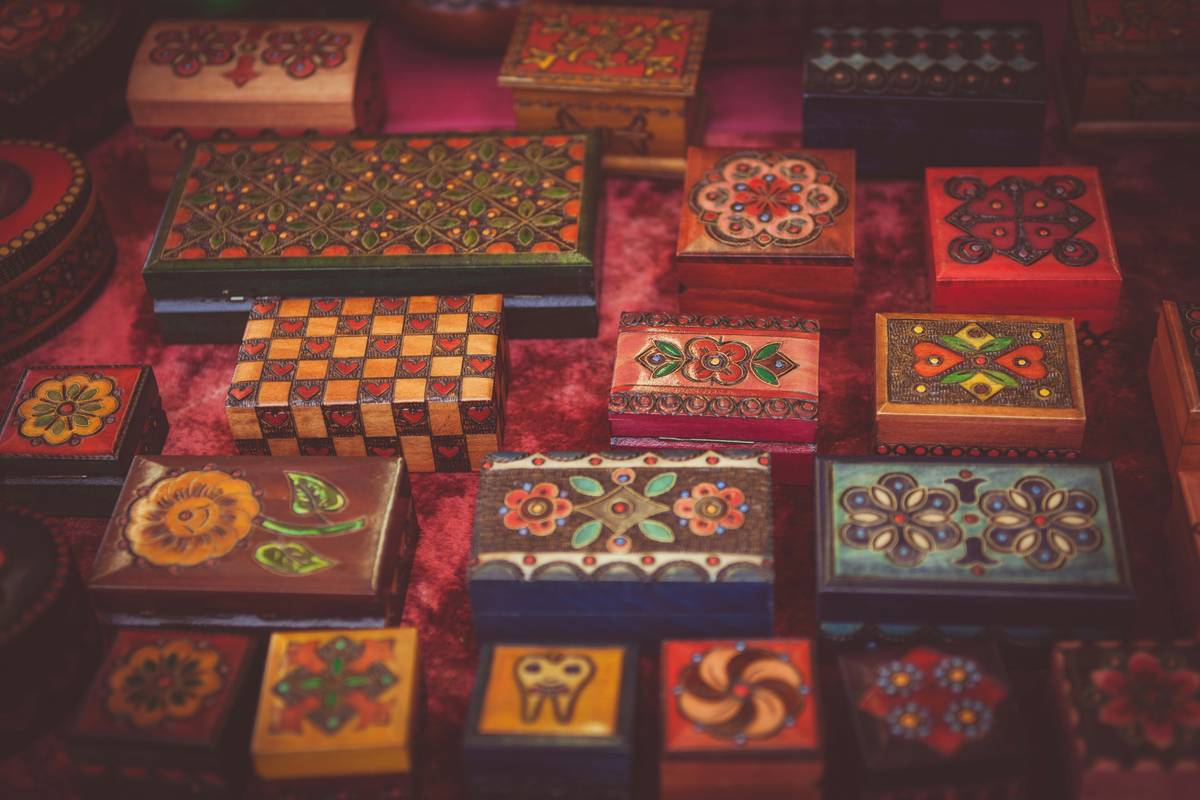
- Curate, don’t coordinate: Mix woods, metals, and matte finishes. A rattan box beside a black ceramic one? Chef’s kiss.
- Assign real jobs: One box = TV remotes. Another = jewelry. No “miscellaneous” limbo zones.
- Layer with height: Stack a small box atop a stack of books, then drape a silk scarf over the edge.
- Lids matter: Flat lids double as coasters. Domed lids add sculptural interest.
- Rotate seasonally: Swap summer seagrass boxes for winter velvet ones—keeps your space feeling fresh.
The Terrible Tip You Should NEVER Follow
“Buy matching sets for uniformity.” Nope. Uniformity reads as sterile. Real homes have soul—and soul has texture, variation, and slight imperfection. Trust me: your guests notice.
Real Homes, Real Results: Before-and-After Magic
Last year, I worked with Sarah K., a pediatrician in Portland, whose entryway was drowning in mail, dog leashes, and random gloves. We installed a custom walnut console with two built-in drawers—but added a single decorative box on top for “urgent” items: sunglasses, lip balm, her work badge.
Result? She stopped losing her keys, and her partner stopped tripping over leashes. Six months later, she texted: “That box paid for itself in saved sanity.”
In another project, a NYC client used vintage cigar boxes (lined with felt) to organize desk supplies. The brass hinges and aged patina made pens and paperclips look curated—not chaotic.
FAQs About Decorative Boxes Home Decor
Where should I place decorative boxes in my home?
Top spots: coffee tables (for remotes), nightstands (jewelry/eye masks), entry consoles (keys/wallets), and bathroom vanities (cotton pads, hair ties). Avoid overcrowding shelves—use one statement box per surface.
Can decorative boxes be used for actual storage long-term?
Absolutely—if you choose the right material. Solid wood and ceramic boxes with tight-fitting lids protect contents from dust and moisture. Just avoid storing photos or electronics in unsealed boxes.
How do I clean decorative boxes?
Dust weekly with a microfiber cloth. For wood: use beeswax polish twice a year. For metal: wipe with vinegar-water mix (1:1) to remove tarnish. Never soak fabric-covered boxes!
Are expensive decorative boxes worth it?
Not always. But investment pieces (solid wood, hand-thrown ceramic) last decades and often appreciate in character. Skip flimsy particleboard—it yellows and chips within a year.
Conclusion
Decorative boxes home decor isn’t about filling shelf space—it’s about creating calm through intentional curation. When chosen with material integrity, styled with deliberate variety, and assigned real purpose, these humble containers become silent heroes of a serene home. So go ahead: ditch the plastic bin. Your remotes (and your inner minimalist) will thank you.
Like a Tamagotchi, your home’s harmony needs daily care—one perfectly placed box at a time.